
Test 1: Metatarsal Loading Test
Purpose: Test for the precense of a Metatarsal Fracture.
Test Position: Supine or Sitting.
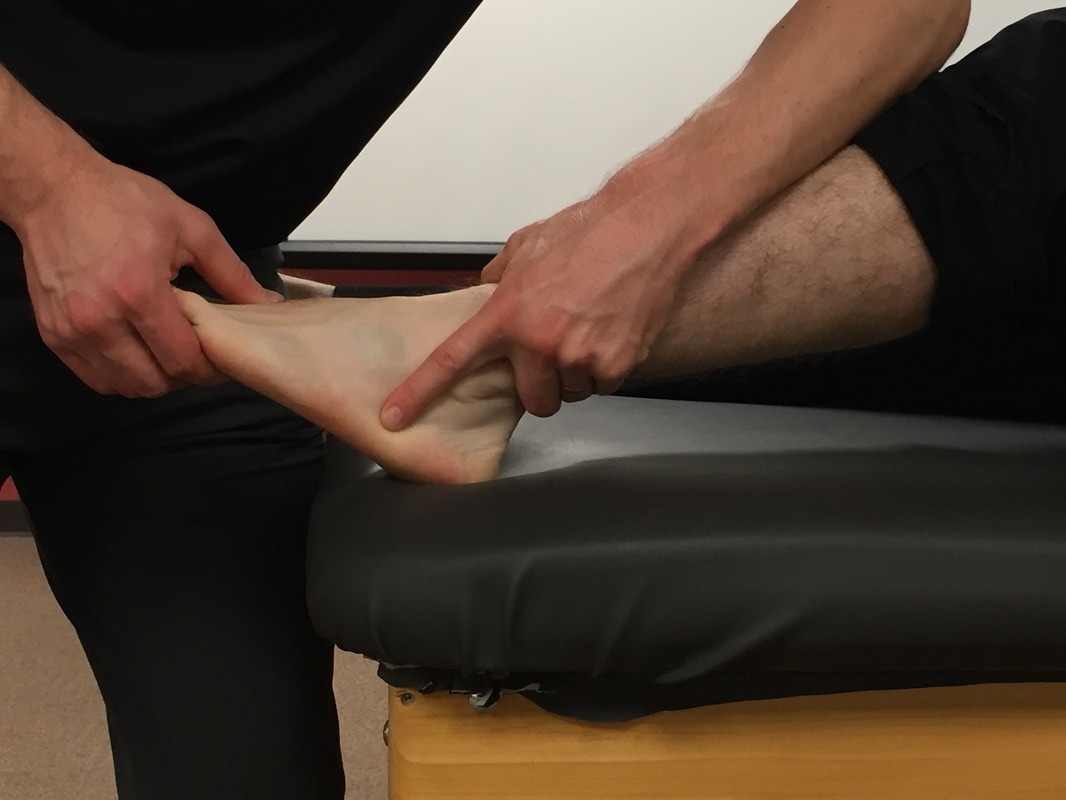
Performing the Test: The examiner grasps the metatarsal of the suspected fracture and pushes it toward the calcaneus, providing an axial loading force. A positive test is reproduction of the patient's symptoms.
Diagnostic Accuracy: Unknown.
Importance of Test: By applying an axial loading force to an injured metatarsal, the examiner is approximating the structures in that region. Compressing these structures will reproduce pain due to inflammatory and healing products that are present in the area. A painful response during this test can be indicative of a metatarsal fracture. Be sure to triangulate the results of this test with the other special tests listed below as well as information obtained from the subjective history.
Test Position: Supine or Sitting.
Performing the Test: The examiner grasps the metatarsal of the suspected fracture and pushes it toward the calcaneus, providing an axial loading force. A positive test is reproduction of the patient's symptoms.
Diagnostic Accuracy: Unknown.
Importance of Test: By applying an axial loading force to an injured metatarsal, the examiner is approximating the structures in that region. Compressing these structures will reproduce pain due to inflammatory and healing products that are present in the area. A painful response during this test can be indicative of a metatarsal fracture. Be sure to triangulate the results of this test with the other special tests listed below as well as information obtained from the subjective history.
Test 2: Tap or Percussion Test
Purpose: To assess for a fracture in the lower extremity.
Test Position: Supine.
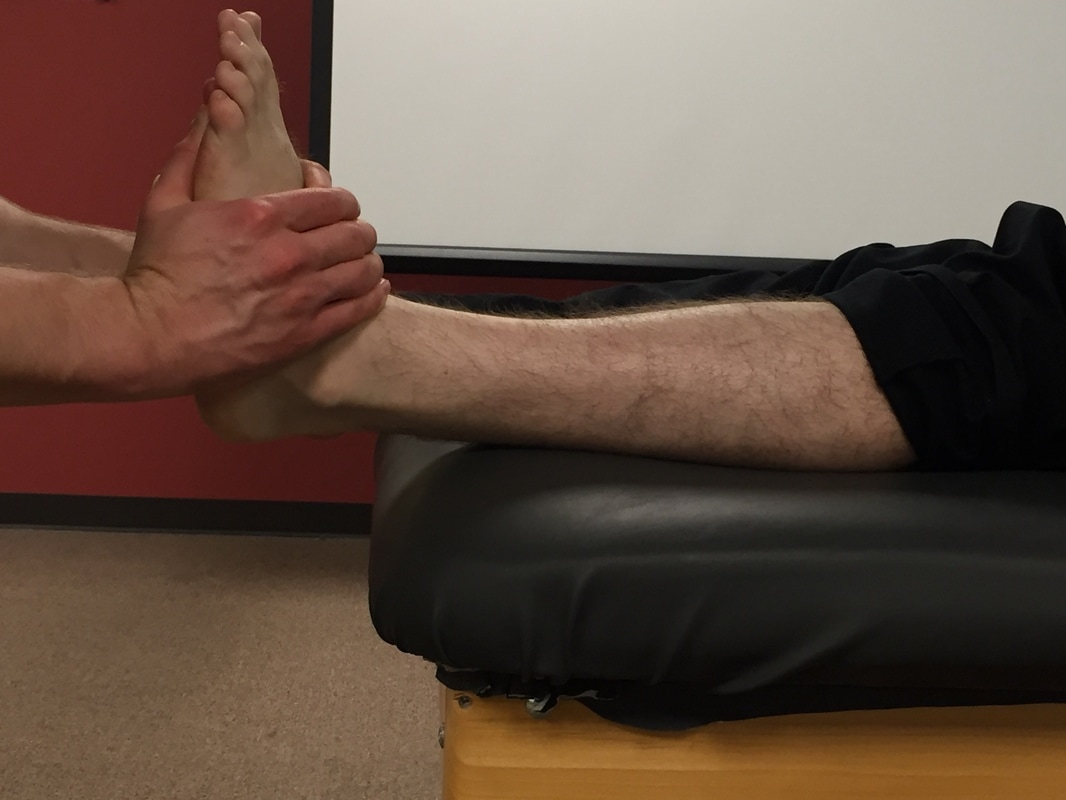
Performing the Test: The patient should not be wearing shoes. The examiner then strikes the heel of the patient. A positive test is reproduction of the patient's worst pain.
Diagnostic Accuracy: Unknown.
Importance of Test: Our bones are covered by a layer of tissue known as the periosteum. It is highly innervated and very sensitive to injury. When a bone is fractured, the periosteum is more easily stimulated and thus pain is experienced. By striking the heel of the foot, a large vibratory/compression force is sent through the limb that stimulates the injured site. It should be noted that the vibratory or percussion test can produce pain in non-musuloskeletal ailments as well, such as psoas abscess, appendicitis, etc. It is important to utilize your subjective history, tests and measures, and general systems screenings to triangulate your findings.
Test Position: Supine.
Performing the Test: The patient should not be wearing shoes. The examiner then strikes the heel of the patient. A positive test is reproduction of the patient's worst pain.
Diagnostic Accuracy: Unknown.
Importance of Test: Our bones are covered by a layer of tissue known as the periosteum. It is highly innervated and very sensitive to injury. When a bone is fractured, the periosteum is more easily stimulated and thus pain is experienced. By striking the heel of the foot, a large vibratory/compression force is sent through the limb that stimulates the injured site. It should be noted that the vibratory or percussion test can produce pain in non-musuloskeletal ailments as well, such as psoas abscess, appendicitis, etc. It is important to utilize your subjective history, tests and measures, and general systems screenings to triangulate your findings.
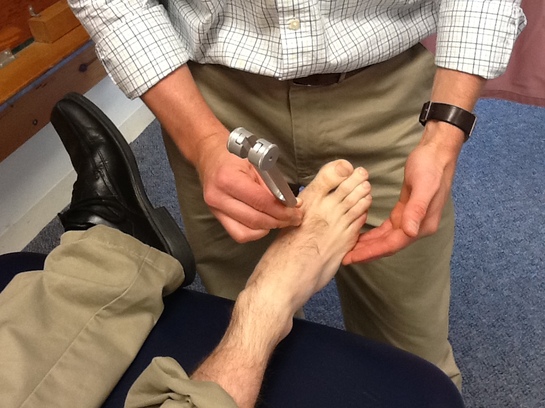
Test 3: Vibration Test
Purpose: Test for the presence of a stress fracture.
Test Position: Sitting or supine.
Performing the Test: The examiner places a tuning fork on the suspected site of the stress fracture.
Diagnostic Accuracy: Unknown.
Importance of Test: Our bones are covered by a layer of tissue known as the periosteum. It is highly innervated and very sensitive to injury. When a bone is fractured, the periosteum is more easily stimulated and thus pain is experienced. By striking the heel of the foot, a large vibratory/compression force is sent through the limb that stimulates the injured site. It should be noted that the vibratory or percussion test can produce pain in non-musuloskeletal ailments as well, such as psoas abscess, appendicitis, etc. It is important to utilize your subjective history, tests and measures, and general systems screenings to triangulate your findings.
Note: these tests should only be used by properly trained health care practitioners.
Test Position: Sitting or supine.
Performing the Test: The examiner places a tuning fork on the suspected site of the stress fracture.
Diagnostic Accuracy: Unknown.
Importance of Test: Our bones are covered by a layer of tissue known as the periosteum. It is highly innervated and very sensitive to injury. When a bone is fractured, the periosteum is more easily stimulated and thus pain is experienced. By striking the heel of the foot, a large vibratory/compression force is sent through the limb that stimulates the injured site. It should be noted that the vibratory or percussion test can produce pain in non-musuloskeletal ailments as well, such as psoas abscess, appendicitis, etc. It is important to utilize your subjective history, tests and measures, and general systems screenings to triangulate your findings.
Note: these tests should only be used by properly trained health care practitioners.