
- Home
- About Us
- TSPT Academy
- Online Courses
-
Resources
- Newsletter
- Business Minded Sports Physio Podcast
- Day in the Life of a Sports PT
- Residency Corner
-
Special Tests
>
-
Cervical Spine
>
- Alar Ligament Test
- Bakody's Sign
- Cervical Distraction Test
- Cervical Rotation Lateral Flexion Test
- Craniocervical Flexion Test (CCFT)
- Deep Neck Flexor Endurance Test
- Posterior-Anterior Segmental Mobility
- Segmental Mobility
- Sharp-Purser Test
- Spurling's Maneuver
- Transverse Ligament Test
- ULNT - Median
- ULNT - Radial
- ULNT - Ulnar
- Vertebral Artery Test
- Thoracic Spine >
-
Lumbar Spine/Sacroiliac Joint
>
- Active Sit-Up Test
- Alternate Gillet Test
- Crossed Straight Leg Raise Test
- Extensor Endurance Test
- FABER Test
- Fortin's Sign
- Gaenslen Test
- Gillet Test
- Gower's Sign
- Lumbar Quadrant Test
- POSH Test
- Posteroanterior Mobility
- Prone Knee Bend Test
- Prone Instability Test
- Resisted Abduction Test
- Sacral Clearing Test
- Seated Forward Flexion Test
- SIJ Compression/Distraction Test
- Slump Test
- Sphinx Test
- Spine Rotators & Multifidus Test
- Squish Test
- Standing Forward Flexion Test
- Straight Leg Raise Test
- Supine to Long Sit Test
-
Shoulder
>
- Active Compression Test
- Anterior Apprehension
- Biceps Load Test II
- Drop Arm Sign
- External Rotation Lag Sign
- Hawkins-Kennedy Impingement Sign
- Horizontal Adduction Test
- Internal Rotation Lag Sign
- Jobe Test
- Ludington's Test
- Neer Test
- Painful Arc Sign
- Pronated Load Test
- Resisted Supination External Rotation Test
- Speed's Test
- Posterior Apprehension
- Sulcus Sign
- Thoracic Outlet Tests >
- Yergason's Test
- Elbow >
- Wrist/Hand >
- Hip >
- Knee >
- Foot/Ankle >
-
Cervical Spine
>
- I want Financial Freedom
- I want Professional Growth
- I want Clinical Mastery

Windlass Mechanism Test
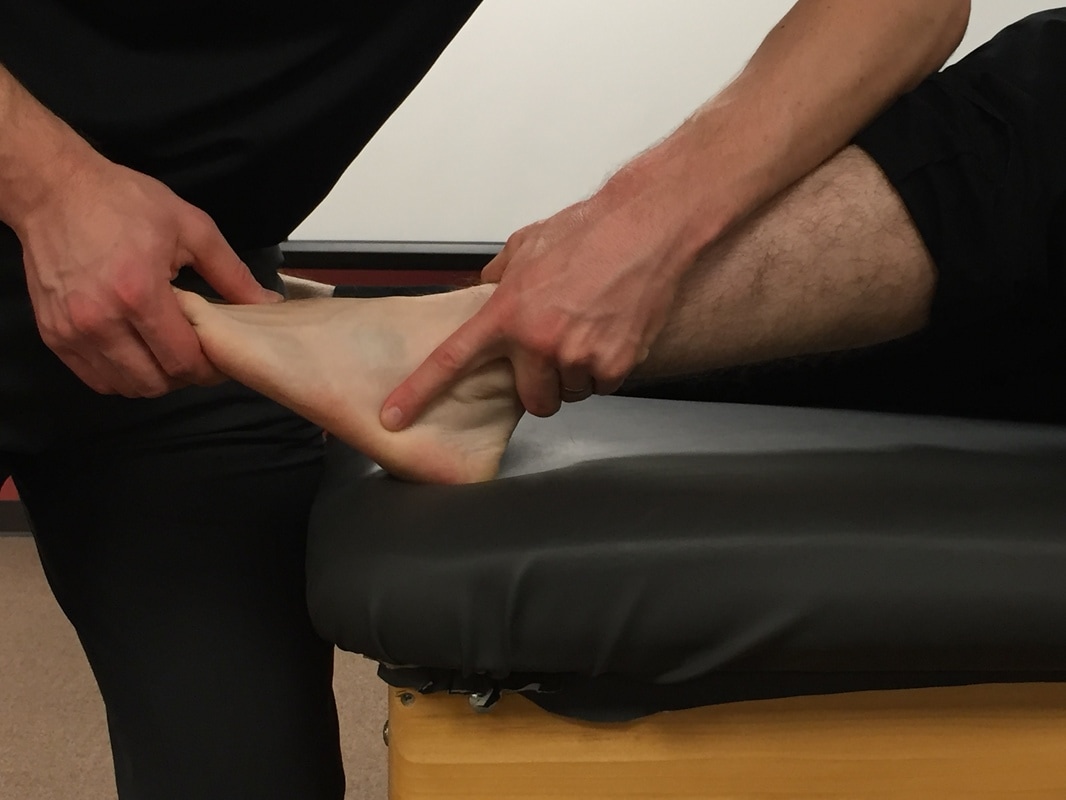
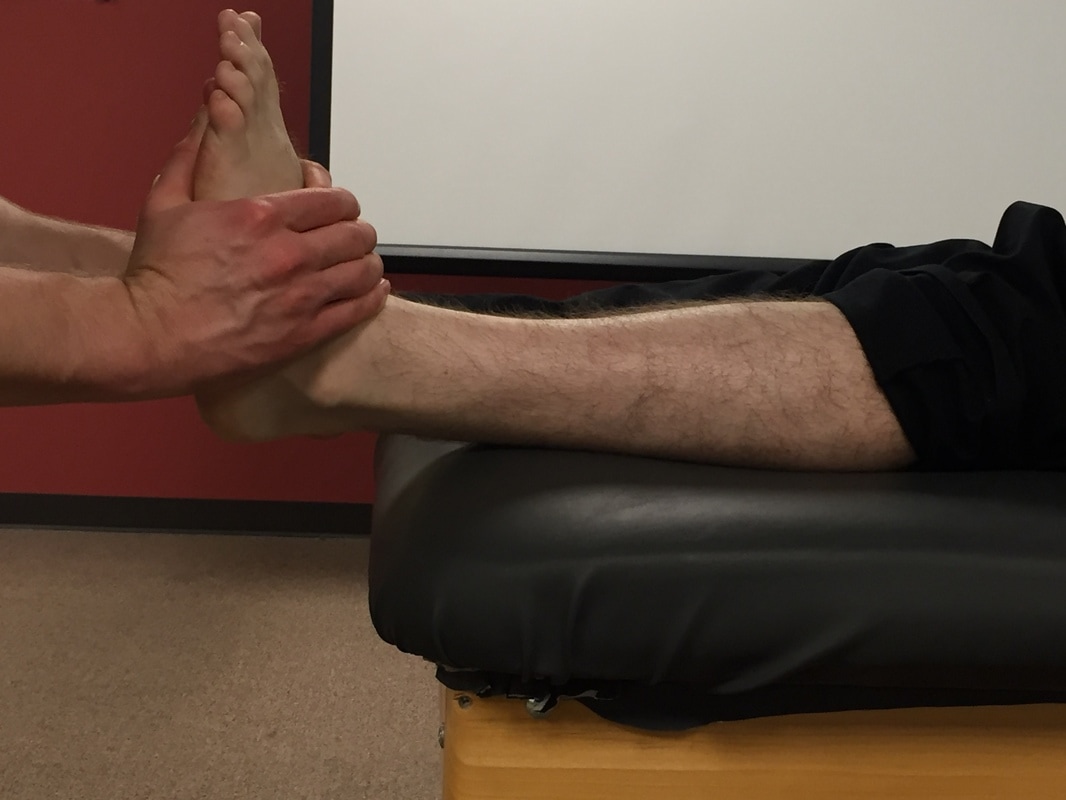
Purpose: To test for the presence of fascial and ligamentous impairments of the foot.
Test position: Part 1: Sitting
Part 2: Standing
Performing the Test:
Part 1: In sitting, the examiner stabilizes the ankle in neutral with 1 hand just proximal to the 1st metatarsal head. Next, the examiner extends the first phalange while allowing the IP joint to flex. A positive test is considered if passive extension is continued to end range or until the patient's pain is reproduced.
Part 2: The patient stands on a stool with the metatarsal heads just off the edge of the stool. The patient is instructed to place equal weight on both feet. Again, the examiner passively extends the first phalange while allowing the IP to flex. A positive test is considered if passive extension is continued to end range or until the patient's pain is reproduced.
Diagnostic Accuracy: Unknown.
Importance of the Test: The windlass effect is the primary mechanism that lifts the medial longitudinal arch during toe off. As the toes extend, the plantar fascia lengths and increases tension on the medial longitudinal arch. This increased tension pull the arch together, raises, and stabilizes the foot during toe-off. Decreased tension would limit the effectiveness of the windlass mechanism and less toe-off would be noted. Clients that have pain or excessive toe extension motion should be examined more thoroughly. Additionally it would be important to check foot type, intrinsic muscle strength, and resting foot position.
Note: these tests should only be performed by properly trained health care practitioners
Test position: Part 1: Sitting
Part 2: Standing
Performing the Test:
Part 1: In sitting, the examiner stabilizes the ankle in neutral with 1 hand just proximal to the 1st metatarsal head. Next, the examiner extends the first phalange while allowing the IP joint to flex. A positive test is considered if passive extension is continued to end range or until the patient's pain is reproduced.
Part 2: The patient stands on a stool with the metatarsal heads just off the edge of the stool. The patient is instructed to place equal weight on both feet. Again, the examiner passively extends the first phalange while allowing the IP to flex. A positive test is considered if passive extension is continued to end range or until the patient's pain is reproduced.
Diagnostic Accuracy: Unknown.
Importance of the Test: The windlass effect is the primary mechanism that lifts the medial longitudinal arch during toe off. As the toes extend, the plantar fascia lengths and increases tension on the medial longitudinal arch. This increased tension pull the arch together, raises, and stabilizes the foot during toe-off. Decreased tension would limit the effectiveness of the windlass mechanism and less toe-off would be noted. Clients that have pain or excessive toe extension motion should be examined more thoroughly. Additionally it would be important to check foot type, intrinsic muscle strength, and resting foot position.
Note: these tests should only be performed by properly trained health care practitioners
References:
Neumann, Donald. Kinesiology of the Musculoskeletal System. 2nd Edition. Mosby Printing Inc. Print.
Neumann, Donald. Kinesiology of the Musculoskeletal System. 2nd Edition. Mosby Printing Inc. Print.
Copyright © The Student Physical Therapist LLC 2023